Home · Topic

Political Movements

Politics & Government

45

Essays · 2017–2026

essay · 2 min

"Ousmane Sonko anticipated everything" - Saïd Larifou

A lawyer close to Ousmane Sonko reflects on his client's strategic acumen and the shift from PASTEF's campaign for power to a new institutional phase in which Sonko, now National Assembly president, and President Diomaye must navigate their distinct visions for Senegal's future. The interview suggests that divergence of strategy, rather than conflict, characterizes their emerging relationship.

Staff · 27 May 2026

essay · 3 min

The Laws of Power and the Senegalese Reckoning: Sonko, Faye, and the Choice to Govern Subordinate

A meditation on Ousmane Sonko's dismissal as Prime Minister of Senegal through the lens of Robert Greene's 48 Laws of Power. The writer argues that Sonko violated the classical law against outshining one's master—not because he threatened Faye, but because he pursued radical reform across all fronts simultaneously, making himself the singular face of every threatened interest. Yet the piece pivots to consider whether his swift return to Keur Gorgui, his base outside power, might signal a deeper understanding of power itself: the choice to govern from movement rather than from office.

Staff · 24 May 2026

Opinion · 4 min

The Peril of Performance: Youth, Social Media, and the Erosion of Serious Political Engagement in Africa

The writer examines how social media's amplification of charisma and visibility threatens to corrupt genuine youth-led political movements across Africa. In Cameroon specifically, the 2025 presidential race is attracting both sincere reformers and opportunists seeking influence rather than power, a dynamic that risks fracturing the very generational energy needed for meaningful change.

Norbert Foy · 10 April 2024

Opinion · 4 min

Cameroon and the politics of empty slogans

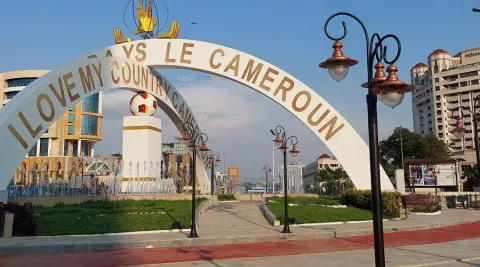
This essay examines how Cameroon's political culture has come to rely almost entirely on symbolic gestures—a ubiquitous presidential portrait, cycling national slogans, monuments, and rebranded success stories—while the material conditions they purport to represent continue to deteriorate.

Wandji Wilfred · 26 March 2024

Opinion · 3 min

The Price of Change: On Sacrifice, Institutions, and Why Good People Stay Silent

The writer reflects on Rebecca's public refusal of a presidential candidacy, using it as a lens to examine a deeper paradox in Cameroonian civic life: citizens simultaneously demand change while scorning those willing to pay its cost. The piece interrogates how we defend the very institutions that harm us, and whether collective refusal to sacrifice ultimately empower those in power.

Norbert Foy · 10 August 2023

Opinion · 5 min

The Politics of the Picture: Celebrity, Complicity, and Cameroon's Defeated Imagination

The writer argues that high-profile Cameroonians—particularly those with global platforms—cannot escape political responsibility through silence or selective visibility. A photograph with state figures is itself a political act, and the absence of critical distance amounts to a form of consent that reinforces the regime's legitimacy.

Norbert Foy · 9 May 2023

essay · 8 min

Airplane Mode Till 2025

A reflection on a two-hour internet protest against Cameroonian telecom operators, examining why such social-media-based activism often fails and what organized, strategic community mobilization requires instead.

Norbert Foy · 25 April 2023

Opinion · 4 min

Do We Deserve a Democracy?

The writer examines whether Cameroon's citizens possess the civic engagement required to sustain a functioning democracy, arguing that the nation's stagnation stems not from the system itself but from widespread citizen apathy, vote-selling, and disinterest in governance. The piece contests the gap between democracy's promise—power to the people—and the reality of a disengaged, manipulable majority holding decision-making authority.

Wandji Wilfred · 6 December 2022

essay · 10 min

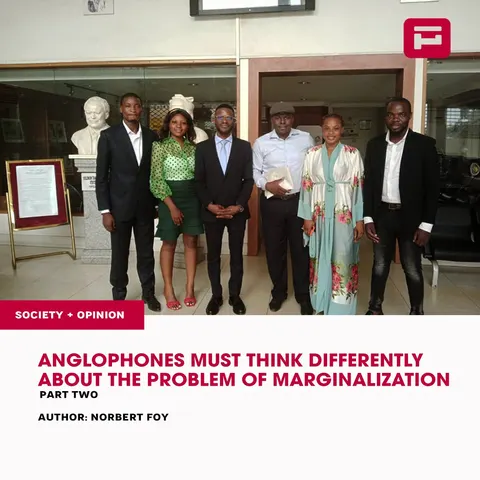
Anglophones Must Think Differently About Marginalization (Part Two)

The writer responds to reader commentary on language acquisition, resource constraints, and elite responsibility in addressing the Anglophone crisis. Through a point-by-point rebuttal, they argue that learning French is a practical survival tool—not assimilation—and that the educated minority has both capacity and obligation to lead solutions rather than wait for mass consensus.

Staff · 14 July 2022

essay · 5 min

Eto'o and Power in Cameroon: Trauma, Ambition, and the Price of Change

This essay examines Cameroonians' fraught relationship with power—rooted in decades of authoritarian rule—and how that collective wariness shapes reactions to Samuel Eto'o's leadership at FECAFOOT. The writer argues that scrutiny of Eto'o's methods, while understandable, may be blinding observers to his effectiveness and his potential role in a broader renewal of Cameroonian leadership.

Norbert Foy · 10 June 2022

essay · 3 min

On Pan-Africanism and Cultural Boundaries

The writer defends a Cameroonian brand's adoption of a Nigerian Yoruba term, arguing that cultural exchange strengthens rather than weakens Africa. She positions the controversy as a test of whether continental unity is a genuine aspiration or merely rhetoric obscuring deeper tribalism.

Norbert Foy · 12 July 2020

Opinion · 6 min

Play Your Music and Say Nothing: On Dissent, Artists, and Political Voice in Cameroon

The writer examines the cultural pressure placed on Cameroonian artists—exemplified by Charlotte Dipanda's recent political statements—to remain silent on governance and regime change. The piece argues that this silencing reflects deeper pathologies: Stockholm Syndrome acceptance of dysfunction, a particular form of crab mentality that polices intellectual ambition, and deliberate attempts to frame artists as intellectually unqualified to engage politics.

Wandji Wilfred · 28 May 2020

Showing 1–12 of 45