Home · Topic

Policy

Politics & Government

28

Essays · 2017–2026

essay · 3 min

The Laws of Power and the Senegalese Reckoning: Sonko, Faye, and the Choice to Govern Subordinate

A meditation on Ousmane Sonko's dismissal as Prime Minister of Senegal through the lens of Robert Greene's 48 Laws of Power. The writer argues that Sonko violated the classical law against outshining one's master—not because he threatened Faye, but because he pursued radical reform across all fronts simultaneously, making himself the singular face of every threatened interest. Yet the piece pivots to consider whether his swift return to Keur Gorgui, his base outside power, might signal a deeper understanding of power itself: the choice to govern from movement rather than from office.

Staff · 24 May 2026
analysis · 5 min

Nine Pillars of Cameroon's Economic Transformation: A Government Development Strategy

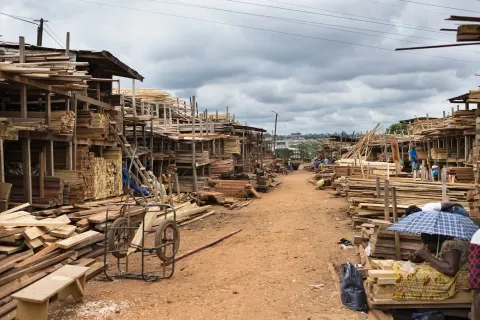
This piece outlines Cameroon's nine-sector development strategy for structural economic transformation, detailing government priorities and investment targets across energy, agribusiness, digital technology, forestry, textiles, mining, hydrocarbons, and related fields. It serves as a practical guide for entrepreneurs and public contractors seeking to identify where government support, subsidies, and contracts are likely to flow.

Norbert Foy · 19 December 2024

Opinion · 5 min

The Courage Tax: Celebrity Influence and the Limits of Hashtag Activism in Cameroon

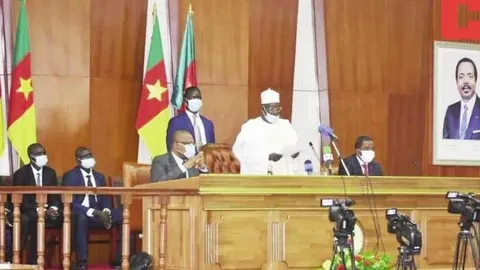
The writer reflects on a delegation meeting with Cameroon's Minister of Arts and Culture to oppose a controversial bill, witnessing firsthand how performers abandoned their stated principles once in the room with power. The piece uses this incident to examine why Cameroonian celebrities claim influence they do not possess, and why national-scale activism remains performative rather than substantive.

Norbert Foy · 18 December 2024

Opinion · 5 min

The Ambiguous Embassy: LGBT Rights, Western Pressure, and Cameroon's Reflexes

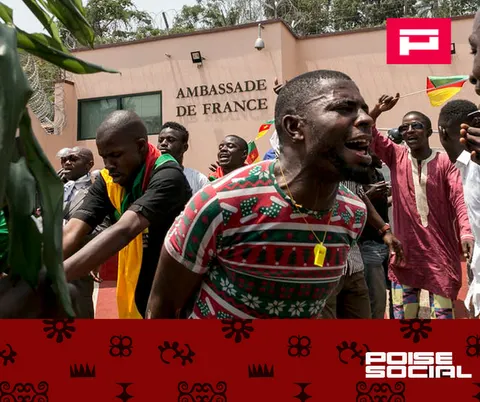
This piece examines the cancelled visit of a French LGBT ambassador to Cameroon as a mirror of the country's genuine homophobia, Western cultural imposition, and the internal contradictions within global LGBT advocacy itself. The writer resists easy framing, acknowledging both the real violence faced by LGBT persons and the legitimate discomfort with what feels like coercive ideological export.

Wandji Wilfred · 23 June 2023

analysis · 3 min

The 2023 Budgetary Allocations: Reading Cameroon's Fiscal Priorities

In November 2022, the Cameroonian parliament approved a 6,345.1 billion FCFA budget for the 2023 fiscal year, with allocations distributed across 35 ministries. The Poise News Desk compiled the figures presented to the Finance and Budget Committee, revealing substantial disparities in government spending priorities.

Staff · 5 December 2022

essay · 2 min

The Minister's Promise: Arts Governance and the Weight of Unresolved Conflict

The Minister of Arts and Culture tells parliament that his administration is working to resolve persistent conflicts across Cameroon's arts sector, citing measures to 'clean up the industry.' Yet the same period sees fresh disputes in actors' guilds and ongoing turmoil at SONACAM, the music copyright body, leaving the minister's pledge untested.

Gi Yo Ndzi · 18 March 2022

Opinion · 5 min

The Quota Question: Why Protective Policy Won't Fix Cameroon's Music Crisis

Following a public debate on instituting local music quotas in Cameroonian media, the writer argues that the real constraint is not foreign competition but domestic underproduction—rooted in artists' misplaced priorities, a flawed success archetype, and structural gaps in how emerging talent is discovered.

Norbert Foy · 15 June 2021

Opinion · 6 min

The Phone Tax: A Study in Governmental Incoherence

In October 2020, Cameroon's government proposed a 33% import tax on mobile phones to be paid directly by consumers—a measure virtually without precedent globally. Poise examines the tax's stated justification, its mechanisms, and the cascading technical, legal, and ethical problems that render it unworkable.

Wandji Wilfred · 20 October 2020

Opinion · 6 min

When Hashtags Don't Do the Job

A reflection on the gap between public outcry and meaningful action in Cameroon, examining why celebrities and citizens fail to effect real change despite widespread discontent. The writer recounts a delegation meeting with the Minister of Arts and Culture, exposing how institutional power captures co-opt potential resistance, and argues that hashtag activism and street protests have proven ineffective.

Norbert Foy · 16 October 2020

Opinion · 9 min

The Gift That Obscures the Legacy

The writer examines how Cameroon's cultural and political systems privilege material gift-giving over substantive contribution, using Manu Dibango's global musical influence as a counterexample to ask what true value—and true remembrance—should mean.

Ngochi Moun’Afese · 3 April 2020

essay · 3 min

Should the Government Legalize Abortion? A Cameroon Perspective

An analytical overview of the abortion legalization debate in Cameroon, where current law permits pregnancy termination only when the mother's life is at risk. The piece systematically presents both pro-life and pro-choice arguments, acknowledging the real toll of illegal abortion on young lives while resisting easy resolution.

Dr. Ndifor Judethaddeus · 29 June 2019

essay · 4 min

Should the Government Legalize Marijuana Consumption?

This analytical piece weighs the case for marijuana legalization in Cameroon—citing potential economic gains through taxation and job creation, and medical applications in pain management and rare epilepsy treatment—against documented public health risks including cognitive decline, mental illness, and respiratory disease. The writer concludes that legalization presents genuine tradeoffs rather than a clear policy direction.

Dr. Ndifor Judethaddeus · 15 June 2019

Showing 1–12 of 28