Home · Topic

Governance

Politics & Government

50

Essays · 2017–2026

essay · 2 min

"Ousmane Sonko anticipated everything" - Saïd Larifou

A lawyer close to Ousmane Sonko reflects on his client's strategic acumen and the shift from PASTEF's campaign for power to a new institutional phase in which Sonko, now National Assembly president, and President Diomaye must navigate their distinct visions for Senegal's future. The interview suggests that divergence of strategy, rather than conflict, characterizes their emerging relationship.

Staff · 27 May 2026
essay · 3 min

The Laws of Power and the Senegalese Reckoning: Sonko, Faye, and the Choice to Govern Subordinate

A meditation on Ousmane Sonko's dismissal as Prime Minister of Senegal through the lens of Robert Greene's 48 Laws of Power. The writer argues that Sonko violated the classical law against outshining one's master—not because he threatened Faye, but because he pursued radical reform across all fronts simultaneously, making himself the singular face of every threatened interest. Yet the piece pivots to consider whether his swift return to Keur Gorgui, his base outside power, might signal a deeper understanding of power itself: the choice to govern from movement rather than from office.

Staff · 24 May 2026

essay · 3 min

Côte d'Ivoire: From Elimination to Detention

In 2000, days after the Côte d'Ivoire national football team was eliminated from the Africa Cup of Nations, the country's military regime detained the players and staff at a training camp for what officials called a "civic lesson." The episode revealed how a fragile government weaponized national sport to project strength and discipline during a period of acute political instability.

Staff · 29 December 2025

essay · 1 min

The Arithmetic of Fragmentation: Cameroon's Party System and the Limits of Electoral Choice

With over 180 registered political parties competing for 280 parliamentary seats, Cameroon's electoral landscape has become a study in mathematical impossibility and institutional dysfunction. The post documents how administrative barriers, factional splits, and an oversized party roster have turned recent elections into a cautionary tale about the gap between formal democratic structures and meaningful political participation.

Norbert Foy · 29 July 2025

Opinion · 4 min

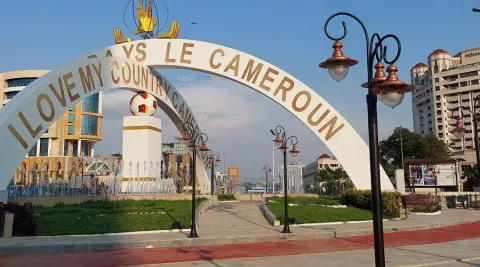
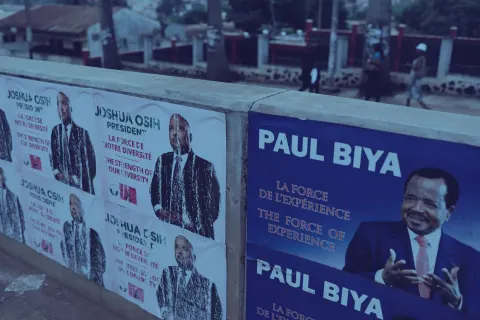
Cameroon and the politics of empty slogans

This essay examines how Cameroon's political culture has come to rely almost entirely on symbolic gestures—a ubiquitous presidential portrait, cycling national slogans, monuments, and rebranded success stories—while the material conditions they purport to represent continue to deteriorate.

Wandji Wilfred · 26 March 2024

Opinion · 3 min

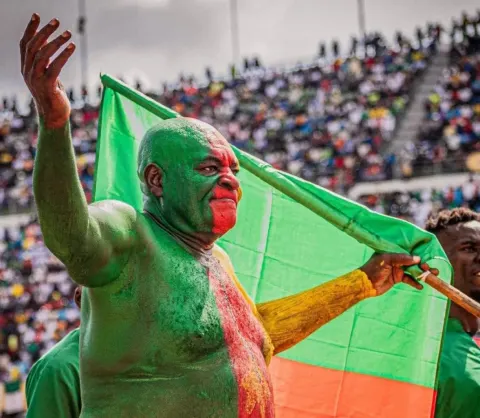
The Unofficial Ambassador: Governance, Reputation, and Cameroonian Football

A writer examines the decades-long relationship between a devoted but increasingly problematic football supporter and Cameroon's national team, tracing how an unofficial ambassador whose image became inseparable from the Lions evolved from hero to liability—raising questions about institutional responsibility and national reputation.

Norbert Foy · 1 February 2024

Opinion · 1 min

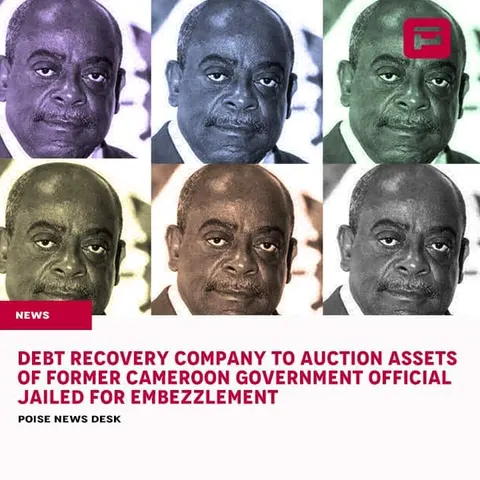
The Lingering Stain: Cataloguing Corruption in Plain Sight

Poise documents the seized assets of Emmanuel Ondo Ndong, former General Manager of FEICOM, convicted of embezzlement over 15 years prior. The inventory—spanning properties across Yaoundé and the South Region, vehicles, and liquid accounts—totals nearly 4.4 billion FCFA, a stark material record of how public office becomes private wealth.

Staff · 13 December 2022

Opinion · 4 min

Do We Deserve a Democracy?

The writer examines whether Cameroon's citizens possess the civic engagement required to sustain a functioning democracy, arguing that the nation's stagnation stems not from the system itself but from widespread citizen apathy, vote-selling, and disinterest in governance. The piece contests the gap between democracy's promise—power to the people—and the reality of a disengaged, manipulable majority holding decision-making authority.

Wandji Wilfred · 6 December 2022

Opinion · 2 min

The Government Doesn't Love Us, and Neither Do We

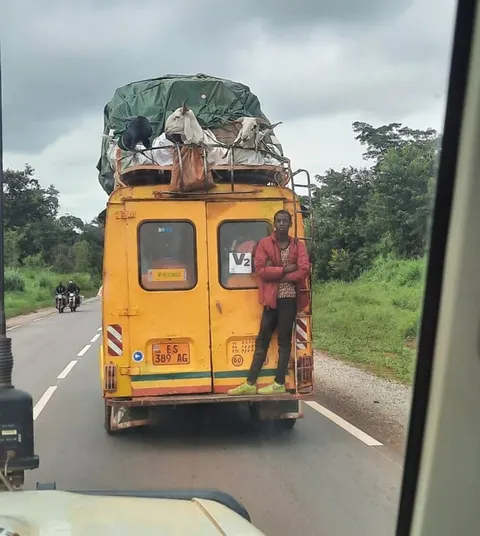
A reflection on structural indifference in Cameroon, tracing a pattern of casual disregard for human dignity—from child bus attendants in Yaoundé to young workers clinging to overloaded vehicles on long-distance routes. The writer asks why economic pressure justifies risking lives when small sacrifices could prevent it.

Wandji Wilfred · 20 June 2022

essay · 5 min

Eto'o and Power in Cameroon: Trauma, Ambition, and the Price of Change

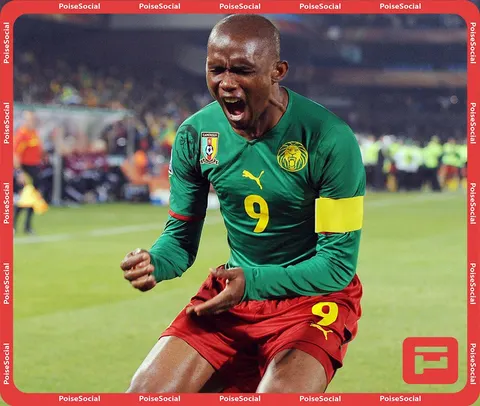
This essay examines Cameroonians' fraught relationship with power—rooted in decades of authoritarian rule—and how that collective wariness shapes reactions to Samuel Eto'o's leadership at FECAFOOT. The writer argues that scrutiny of Eto'o's methods, while understandable, may be blinding observers to his effectiveness and his potential role in a broader renewal of Cameroonian leadership.

Norbert Foy · 10 June 2022

essay · 6 min

The Embiid Choice: Governance, Loyalty, and the Economics of Representation

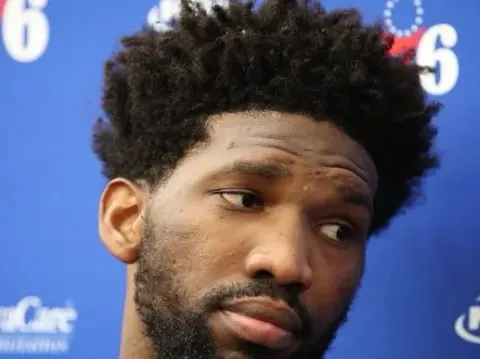
When NBA star Joel Embiid moved to obtain French nationality for international basketball competition, Cameroonians responded with anger rooted in historical grievance and wounded pride. The writer examines both the rational constraints—financial and institutional—that may have guided his decision, and the legitimate frustration of a nation whose young talents consistently leave for more resourced systems.

Wandji Wilfred · 4 May 2022

essay · 2 min

The Minister's Promise: Arts Governance and the Weight of Unresolved Conflict

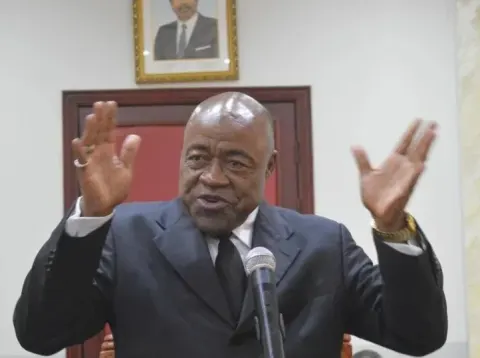
The Minister of Arts and Culture tells parliament that his administration is working to resolve persistent conflicts across Cameroon's arts sector, citing measures to 'clean up the industry.' Yet the same period sees fresh disputes in actors' guilds and ongoing turmoil at SONACAM, the music copyright body, leaving the minister's pledge untested.

Gi Yo Ndzi · 18 March 2022

Showing 1–12 of 50