

Most millennials grew up with baby boomer parents who had a list of at most 10 career options or paths that one could choose.
You could become a doctor, lawyer, teacher/professor, engineer, pilot, journalist or government administrator.
For the most part, we were limited by our vocabulary and visibility. We all encountered government administrators, we visited a doctor and could identify one by their white coat. At some point, some thought men were doctors and women were nurses. We also identified pilots by uniforms.
Every other career path, including sports and entrepreneurship were things you fell back on when you could not make it to any of the aforementioned.
Mostly we are limited by our vocabulary. Today we don’t have that excuse.
Below is a practical classification of economic domains, with career guidance grounded in African realities and global trends.
1. Primary Sector — Extracting Value from the Earth
This domain transforms natural resources into raw inputs. It remains the backbone of most African economies and will stay strategically important as the world races for critical minerals, food security, and energy.
Sub-domains and what they look like:
Agriculture & agribusiness — crop production, livestock, aquaculture, agro-processing, cold chain logistics
Mining & extractives — gold, cobalt, lithium, tungsten, tantalum, copper, rare earths
Forestry, fisheries, and renewable resource management • Oil, gas, and energy extraction
Why it matters for Africa: The continent holds roughly 30% of the world’s mineral reserves. The global energy transition is driving unprecedented demand for African critical minerals, and food systems remain a massive employment base.
Career paths to consider:
Agronomist, agricultural engineer, supply chain specialist for commodities
Mining engineer, geologist, metallurgist, mineral processing technician
ESG analyst, traceability and compliance officer
Agritech founder building solutions for smallholder farmers
Skill foundations: Earth sciences, agronomy, logistics, environmental management, and increasingly — data analytics applied to yield optimization and resource tracking.
2. The Secondary Sector — Manufacturing and Value Addition
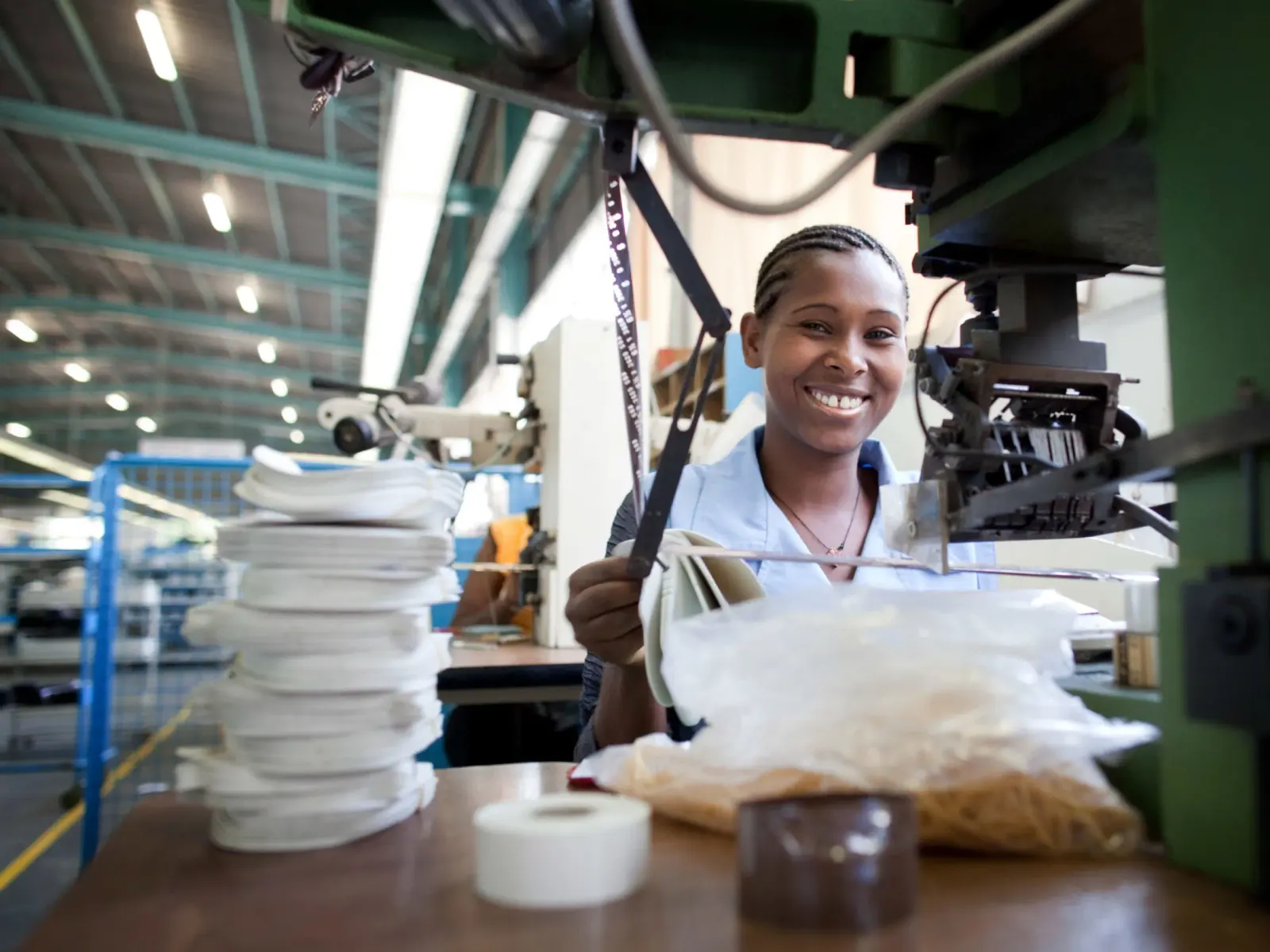
This is where raw materials become finished goods. Africa’s historic weakness has been exporting raw and importing finished products. The continental push for industrialization is creating real opportunity here.
Sub-domains:
Light manufacturing — textiles, food processing, consumer goods, packaging
Heavy manufacturing — steel, cement, automotive assembly, machinery
Mineral beneficiation and processing — turning raw ore into refined metals, alloys, and battery-grade materials • Construction and infrastructure
Energy generation — solar, hydro, geothermal, gas-to-power
Why it matters: The midstream gap — between extraction and finished products — is one of the most strategically important investment frontiers on the continent today.
Career paths:
Process engineer, plant manager, quality control specialist
Industrial designer, manufacturing operations lead
Construction project manager, civil/structural engineer
Energy systems engineer, grid integration specialist
3. The Tertiary Sector — Services
Services already dominate most African economies by share of GDP, though formal employment lags. This is the broadest domain and the easiest entry point for many young professionals.
Sub-domains:
Finance — banking, insurance, asset management, fintech
Trade & retail — wholesale, e-commerce, import/export
Logistics & transport — shipping, freight forwarding, last-mile delivery
Hospitality & tourism
Healthcare delivery
Education and training
Professional services — legal, accounting, consulting
Why it matters: Africa’s mobile money showed how services can leapfrog legacy infrastructure. Fintech, logistics for e-commerce, and healthcare delivery are absorbing huge capital flows.
Career paths worth highlighting:
Financial analyst, credit officer, fintech product manager
Healthcare professional combined with digital health systems expertise
Supply chain and logistics specialist for cross-border trade
Tourism entrepreneur leveraging cultural and ecological assets
4. The Quaternary Sector — Knowledge and Information
This is the knowledge economy: where the product is intellectual rather than physical. It’s the fastest-growing domain globally and increasingly accessible to Africans working remotely or building locally.
Sub-domains:
Software & technology — engineering, cloud, DevOps, cybersecurity
Data science, AI, and machine learning
Research and development
Media, content, and creative industries (often called the orange economy)
Consulting and strategy
Financial engineering and quantitative analysis
Why it matters: Remote work has globalized labor markets. A Lagos or Kigali based software engineer can earn dollar denominated income while staying rooted at home. African creative industries — Nollywood, Afrobeats, fashion — are projected to be major export earners.
Career paths:
Software engineer, ML engineer, data scientist
Product designer, UX researcher
Researcher in policy think tanks or universities
Content creator, filmmaker, music producer, game developer
5. The Quinary Sector — Decision-Making and Human Capital Development
The top tier: senior leadership, policymaking, and the institutions that develop people. Smaller in headcount but disproportionate in influence.
Sub-domains:
Executive leadership in business and civil society
Government, diplomacy, and policy
Multilateral organizations (AU, AfDB, AfCFTA Secretariat, UN agencies)
Higher education and research leadership
Philanthropy and development finance
Career paths: This domain is typically reached after experience elsewhere — but it’s worth knowing it exists, because choices made here shape the conditions everyone else operates under.
Share this. It might change a life!